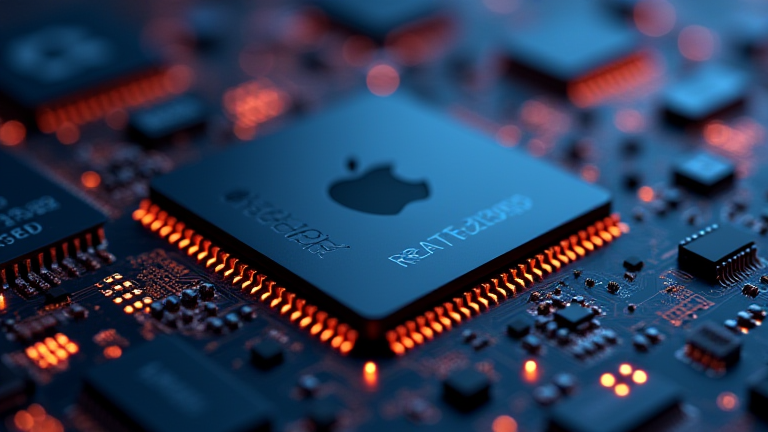
TL;DR: President-elect Donald Trump is reportedly pressuring Apple to accelerate the adoption of advanced memory chips sourced from China to mitigate looming AI supply shortages. This strategic shift aims to secure critical components for next-generation Apple Intelligence features while navigating complex geopolitical trade tensions.
Geopolitical Leverage and Supply Chain Resilience
The intersection of artificial intelligence ambitions and international trade policy has reached a critical juncture. As Apple prepares to roll out more sophisticated on-device AI capabilities, the company faces a significant bottleneck in high-bandwidth memory (HBM) and advanced NAND storage solutions. Reports indicate that the incoming administration is urging tech giants to diversify their sourcing strategies, specifically looking toward Chinese manufacturers who have recently made strides in memory production technologies. This pressure is not merely about cost reduction but about ensuring that the United States maintains a competitive edge in the global AI race by securing reliable supply lines that are less vulnerable to Western export controls.
If you want to dig deeper, check out our guide on How to Set Up Shopify Inventory Tracking for Beginners.
Technical Specifications and Market Impact
Chinese memory manufacturers, particularly ChangXin Memory Technologies (CXMT) and Yangtze Memory Technologies Corp (YMTC), have been improving their process nodes. While they still lag behind Samsung and SK Hynix in the most advanced HBM3E tiers, their advancements in 128-layer and 200-layer NAND flash storage are becoming increasingly competitive. For Apple, integrating these components could mean maintaining price stability for consumer devices while scaling up production for AI-enabled iPhones and Macs. The industry impact is profound; if Apple commits to using Chinese memory chips at scale, it could legitimize these manufacturers in the eyes of global consumers and force competitors to reconsider their own supply chain dependencies. However, this move carries significant regulatory risk, as it may conflict with ongoing US efforts to restrict the flow of advanced semiconductor technology to China.
Consumer Implications and Future Outlook
For the average consumer, the immediate effect may be subtle, manifesting as slightly more affordable devices or faster storage speeds in mid-range models. However, the long-term implications involve a fragmented global tech ecosystem. If major US companies like Apple begin relying heavily on Chinese semiconductor infrastructure, it could reshape the geopolitical landscape of technology. Analysts warn that this could lead to retaliatory measures from other nations or stricter domestic regulations in the US. The coming quarters will be crucial in determining whether Apple can successfully navigate these pressures without compromising its brand reputation or operational efficiency. The company’s ability to balance political demands with technical requirements will serve as a test case for how Western tech firms can operate in an increasingly polarized market.
FAQ
Q: Why is Trump pressuring Apple on Chinese memory chips?
A: The pressure aims to secure a stable supply of AI components by leveraging Chinese manufacturing capabilities to prevent shortages.
Q: Which Chinese companies are involved in this supply chain shift?
A: Major players include YMTC and CXMT, who are producing competitive NAND and DRAM alternatives.
Q: How will this affect Apple’s AI devices?
A: It may lead to more resilient production lines and potentially lower costs, but carries regulatory risks.