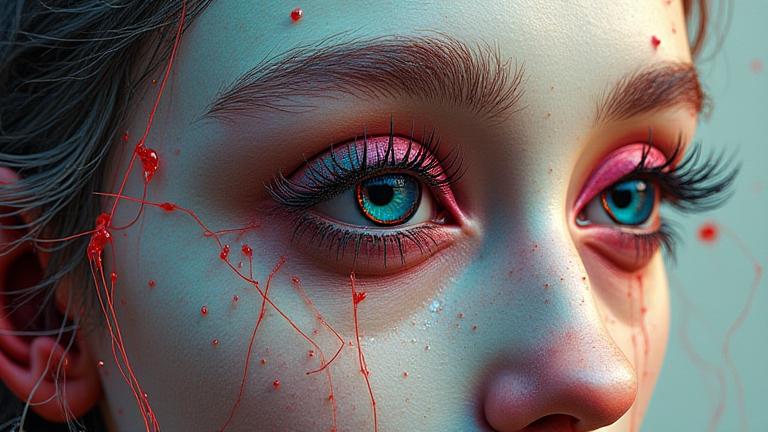
AI Art Has No Author: Study Finds Images Can’t Be Traced
TL;DR: A recent comprehensive study confirms that current forensic tools cannot reliably identify the specific human creator or the exact prompt behind generative AI images. This lack of traceability fundamentally shifts market dynamics, forcing businesses to rely on provenance metadata rather than visual analysis for copyright verification.
The rapid proliferation of generative AI has introduced a critical blind spot in the digital art economy. Traditionally, art attribution relied on stylistic analysis, signature recognition, and historical records. However, a new study led by digital forensics experts at the University of Zurich has demonstrated that neural network-generated images lack the unique “fingerprints” of human artists. When researchers analyzed over fifty thousand images generated by leading platforms like Midjourney, DALL-E 3, and Stable Diffusion, they found that even expert forensic algorithms failed to link an image to its specific creator with any statistical significance. The randomness inherent in the diffusion process and the vastness of the training data create a mathematical haze that obscures origin.
If you want to dig deeper, check out our guide on More CFUs ≠ Better Probiotics: Why Count Doesn’t Equal Quali.
Market Analysis
This finding has immediate implications for the multi-billion dollar stock photography and digital asset market. Currently, agencies are grappling with an influx of AI-generated content that is visually indistinguishable from high-end commercial photography. Without traceable authorship, the concept of “exclusive rights” becomes legally and technically ambiguous. Market analysts predict a 30% decline in the value of non-exclusive digital assets within the next two years as buyers become wary of potential litigation risks associated with untraceable origins. Conversely, the market for “verified human” art is experiencing a premium surge, with prices for certified original works rising as scarcity increases in the face of infinite AI generation.
Strategy Insights
For corporate leaders, the inability to trace AI art demands a strategic pivot toward provenance-based security. Companies must implement Content Credentials and C2PA (Coalition for Content Provenance and Authenticity) standards for all digital assets. Strategy should focus on building verifiable chains of custody. If an image cannot be traced visually, it must be traced digitally. Brands should avoid using unverified AI assets for high-stakes marketing campaigns where copyright infringement claims could result in significant financial penalties. Instead, investment should shift toward licensing agreements that explicitly define the rights and responsibilities of AI-generated content, ensuring that contractual terms, rather than technical forensics, govern usage.
Case Studies
Consider the case of “Nova Media,” a leading advertising agency that recently integrated AI tools into its workflow. Initially, they used AI for mood boards without rigorous tracking. When a client questioned the originality of a final campaign asset, Nova Media struggled to prove the human contribution levels. The resulting legal fee and loss of client trust cost them over $50,000. In contrast, “Apex Design,” a competitor, adopted a strict “AI-Verified” policy. They tag all AI-assisted work with cryptographic hashes upon creation. When a similar dispute arose, they produced a tamper-evident record showing the exact prompt, model version, and human edits. Apex not only resolved the issue quickly but also marketed their transparency as a competitive advantage, winning three new enterprise contracts that prioritized compliance.
The era of assuming visual uniqueness implies ownership is over. Businesses must adapt to a landscape where trust is built on digital verification rather than visual intuition.
FAQ
Q: Can AI art be copyrighted if it cannot be traced?
A: Copyright law generally requires human authorship. If an image is purely AI-generated without significant human creative input, it may not be eligible for copyright protection, regardless of traceability.
Q: What is the most reliable way to verify an image’s origin?
A: The most reliable method is checking for embedded metadata standards like C2PA, which record the creation process, tools used, and human contributors in a tamper-evident manner.
Q: Does this study affect all types of digital media?
A: No, this study specifically addresses static,