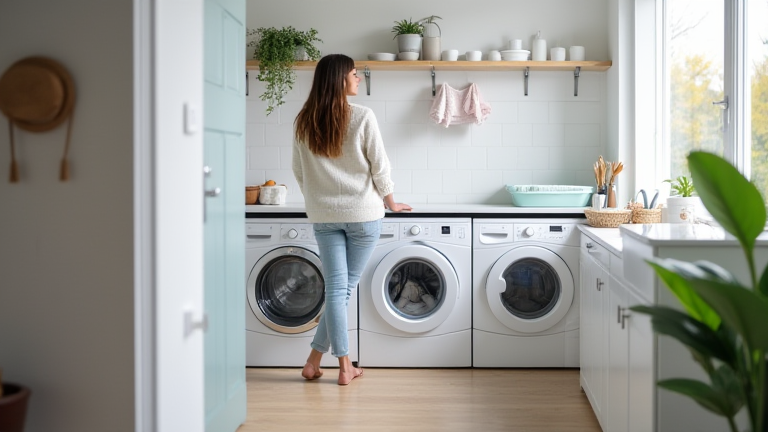
TL;DR: Leverage smart washing machines with AI-driven fabric detection and ultra-low water consumption to automate the sorting and washing process. Combine this with high-efficiency heat pump dryers and modular storage systems to maximize space and minimize energy waste in your solo living environment.
The Smart Laundry Revolution
Living alone often means balancing a busy schedule with the mundane task of laundry. Recent advancements in home appliance technology have transformed this chore from a time-consuming burden into an automated, efficient process. The latest generation of smart washers and dryers is not just about convenience; it is about precision, sustainability, and space optimization. These devices utilize artificial intelligence to detect fabric types, load weights, and soil levels, automatically adjusting water temperature, agitation intensity, and cycle duration. This ensures that your clothes are cleaned effectively without unnecessary wear and tear or resource wastage.
Key Specifications and Technologies
Modern high-efficiency models boast impressive specifications that directly impact your utility bills and environmental footprint. Many new units feature heat pump drying technology, which recycles warm air to dry clothes at lower temperatures, reducing energy consumption by up to 50% compared to conventional vented dryers. Furthermore, these appliances often include ultra-low water usage cycles, consuming as little as 10 gallons per load, a significant improvement over older models that could use over 40 gallons. Connectivity is another critical spec; most new devices offer Wi-Fi integration, allowing users to start, stop, and monitor cycles remotely via smartphone apps. This remote access is particularly beneficial for solo dwellers who may need to adjust cycle times based on their personal schedules or electricity pricing tiers.
Industry Impact and Sustainability
The shift toward smart laundry solutions is reshaping the home appliance industry. Manufacturers are increasingly focusing on sustainability, responding to consumer demand for eco-friendly products. This trend has led to the development of biodegradable detergent pods and filters that capture microplastics, preventing them from entering waterways. The industry is also seeing a rise in compact, stackable units designed specifically for small apartments and urban living spaces. These innovations are reducing the carbon footprint of household chores while providing users with greater control over their laundry processes. As these technologies become more affordable and widespread, they are setting new standards for home efficiency and convenience.
Organization and Storage Solutions
Beyond the machines themselves, organizing your laundry space is crucial for efficiency. Modular storage units made from durable, moisture-resistant materials help keep detergents, softeners, and cleaning tools neatly arranged. Vertical storage racks maximize limited floor space, allowing for easy access to supplies without cluttering the area. Additionally, using color-coded hangers and labeled bins for different fabric types can streamline the sorting process. By integrating these organizational strategies with smart laundry technology, you can create a seamless workflow that saves time and reduces stress.
FAQ
Q: How much energy do heat pump dryers save compared to traditional dryers?
A: Heat pump dryers can reduce energy consumption by up to 50% by recirculating warm air, making them significantly more efficient than conventional vented models.
If you want to dig deeper, check out our guide on Weekly Nutrition Q&A: Your Personal Diet Questions Answered.
Q: Are smart washing machines compatible with all types of smartphones?
A: Most modern smart washers support both iOS and Android platforms, allowing remote control and monitoring through dedicated manufacturer apps.
Q: What is the average water usage of a modern high-efficiency washer?
A: Current high-efficiency models typically use between 10 to 15 gallons per load, a drastic reduction from the 40+ gallons used by older standards.