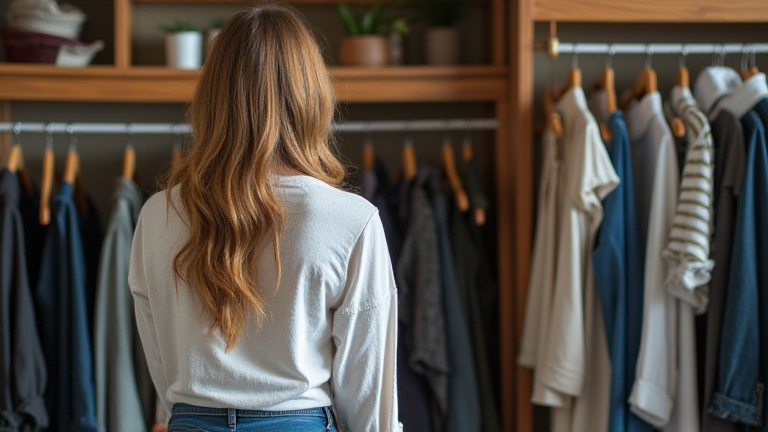
TL;DR: The shift toward a “thrift-only” wardrobe is no longer a niche aesthetic but a mainstream economic strategy driven by rising new clothing costs and heightened sustainability awareness. This trend has transformed thrift stores into sophisticated retail ecosystems, forcing legacy fashion brands to rethink their value propositions and supply chains to compete with secondhand alternatives.
The Economic Shift to Secondhand
The narrative around clothing has fundamentally changed. Consumers are no longer just seeking bargains; they are actively rejecting the fast fashion model. According to a recent report by ThredUp, the secondhand market is projected to grow at a compound annual growth rate of 22%, significantly outpacing the online retail growth rate of 6.5%. This disparity highlights a structural break in consumer behavior. The average American now spends 30% less on new apparel compared to five years ago, not because of a reduction in spending power, but because of a reallocation of funds toward pre-owned items. This is not merely a recessionary tactic but a cultural pivot. The “thrifty” consumer is now the “smart” consumer, viewing ownership as a temporary state rather than a permanent one.
Expert Insights on Quality and Curation
Industry analysts suggest that the rise of the “complete thrifted closet” is driven by the increasing quality of curated inventory. Unlike the chaotic nature of traditional charity shops, modern digital platforms and high-end vintage retailers offer vetted, categorized, and authenticated goods. Sarah Jenkins, a senior fashion economist at McKinsey, notes, “We are seeing a professionalization of the resale space. Brands are no longer fighting resale; they are leveraging it. When a consumer builds a closet exclusively from thrifted sources, they are often accessing higher-quality materials and construction techniques that have fallen out of favor in fast fashion production.” This insight challenges the notion that thrifted clothing is inferior. In fact, many consumers report that their thrifted garments last longer, offering a higher cost-per-wear value than their new counterparts. The curation process has become a skill, with social media influencers providing tutorials on how to identify high-quality fabrics and timeless silhouettes, further legitimizing the practice.
Future Predictions and Industry Impact
Looking ahead, the integration of technology will accelerate this trend. Artificial intelligence is being deployed to tag and categorize inventory in real-time, making the thrifted shopping experience as seamless as buying new. By 2028, it is predicted that one in every four pieces of clothing purchased in the developed world will be secondhand. This shift will force legacy brands to adopt circular business models, such as take-back programs and rental services, to remain relevant. The “complete thrifted closet” will become a status symbol, representing not just financial prudence but ethical consciousness. As resources become scarcer and environmental regulations tighten, the ability to build a wardrobe without generating new waste will be the ultimate luxury. Brands that fail to adapt to this circular economy risk becoming obsolete, while those that embrace transparency and durability will thrive. The future of fashion is not about buying more; it is about choosing better, used pieces that tell a story of sustainability and savvy.
FAQ
Q: Is it possible to build a complete wardrobe using only thrifted clothes?
A: Yes, with the expansion of online resale platforms and organized physical stores, it is entirely feasible to curate a complete wardrobe from secondhand sources, offering variety and quality comparable to new retail.
If you want to dig deeper, check out our guide on 10 Proven Health Tips to Boost Your Energy and Wellness.
Q: Why are more consumers choosing thrifted over new clothing?
A: Consumers are driven by both economic factors, such as lower prices, and ethical considerations, including the desire to reduce environmental impact and support a circular economy.
Q: How is the rise of thrift shopping affecting traditional fashion brands?
A: Traditional brands are pressured to improve quality and transparency, with many launching their own resale or rental programs to compete with the growing secondhand market.