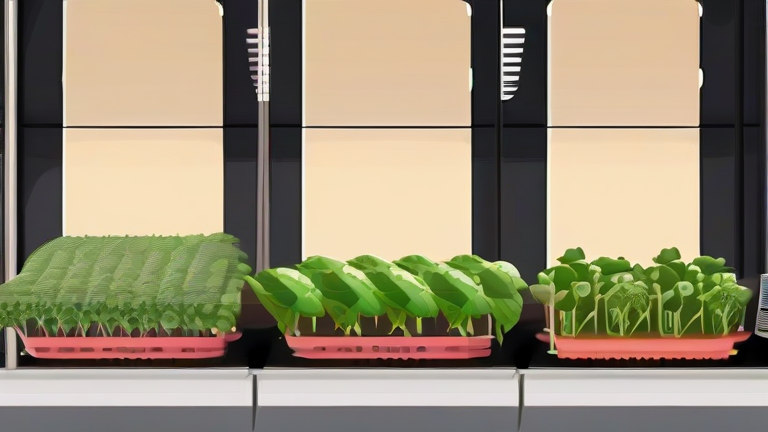
Vertical Farming Cuts Urban Food Miles & Boosts Sustainability

Vertical farming represents a revolutionary shift in how we produce food in dense urban environments. By stacking crops vertically in controlled indoor environments, this method drastically reduces the distance food travels from farm to table. This guide will walk you through the essential steps to establish a small-scale vertical farming system that enhances sustainability and minimizes your ecological footprint.
Step 1: Choose the Right Location
Begin by identifying a suitable indoor space. A spare room, basement, or even a large closet can work. The ideal location must have access to electricity for lighting and climate control, as well as a water source. Ensure the space is secure from pests and has adequate ventilation. Natural light is not strictly necessary but can help reduce energy costs if available. Measure the available space carefully to plan your shelving units effectively.
If you want to dig deeper, check out our guide on Integrate Mental Health Apps with Wearable Biometrics.
Step 2: Select Your Growing System
There are two primary methods: hydroponics and aeroponics. Hydroponics involves growing plants in nutrient-rich water solutions, while aeroponics mists the roots with nutrients. For beginners, deep water culture or nutrient film technique hydroponics are easier to manage. Choose a system that fits your space and budget. Modular shelving units with integrated grow lights are widely available and offer a plug-and-play solution for urban growers.
Step 3: Install Lighting and Climate Control
Light is the most critical component of vertical farming. Invest in full-spectrum LED grow lights, which are energy-efficient and emit minimal heat. Position lights at the correct distance from the canopy to prevent burning while ensuring adequate photosynthesis. Maintain temperatures between 65°F and 75°F (18°C–24°C) and keep humidity levels around 50-60%. A small dehumidifier or fan may be necessary to maintain these conditions.
Step 4: Plant and Maintain
Start with fast-growing leafy greens like lettuce, spinach, and kale. These crops thrive in vertical systems and have short growth cycles. Ster