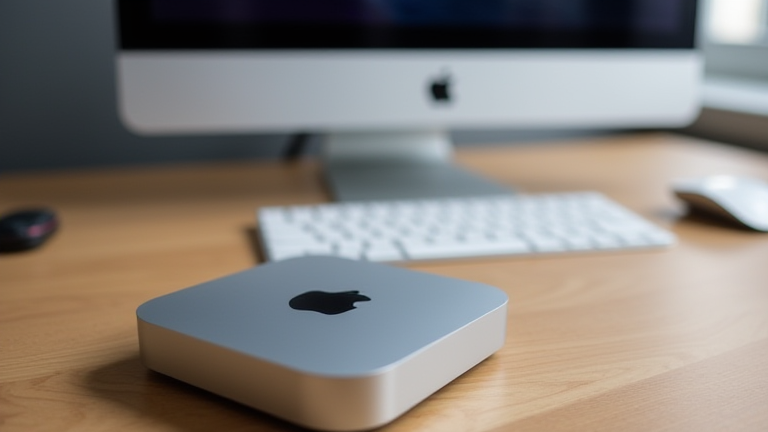
Why the M1 Mac Mini Is the Best Budget Workstation
TL;DR: The M1 Mac Mini offers unparalleled single-core performance and efficiency, making it the most cost-effective entry point into professional creative workflows. It eliminates the need for expensive high-end hardware for tasks like video editing and code compilation by delivering desktop-class power in a compact, silent package.
Since its release, the Apple Silicon ecosystem has fundamentally shifted the definition of a budget workstation. While initial skepticism surrounded the transition from Intel chips, real-world benchmarks have proven that the M1 chip punches far above its weight class. For developers, designers, and students, the combination of low latency, zero fan noise under moderate loads, and exceptional battery-like efficiency makes it a standout choice. Recent software updates have further optimized macOS for the M1 architecture, ensuring that applications like Final Cut Pro and Xcode run natively without emulation overhead. This means that the machine not only performs well but does so with minimal energy consumption, reducing operational costs for small businesses and remote workers. The industry impact has been significant, forcing competitors to rethink their entry-level strategies. Traditional PC manufacturers have struggled to match the performance-per-watt ratio that the M1 achieves, leading to a gap in the mid-range market that the Mac Mini continues to exploit effectively.
If you want to dig deeper, check out our guide on Robert Welch Cutlery: 20-Year-Old vs. Brand New Comparison.
Latest Developments and Industry Impact
The latest developments in the M1 Mac Mini’s ecosystem focus on expanding its utility beyond basic computing. With the maturation of the Universal 2 binary, more professional software is now running natively on Apple Silicon, eliminating the Rosetta 2 translation layer for most daily tasks. This native support translates to faster boot times, quicker app launches, and smoother multitasking. Furthermore, the integration of hardware-accelerated encryption and the Secure Enclave has made the M1 Mini a secure option for handling sensitive data, appealing to legal and financial sectors that previously avoided Macs for security concerns. The compact form factor also allows for unique setups, such as wall-mounted workstations or placement under desks, saving valuable real estate in office environments. As more developers build their tools specifically for the ARM architecture, the software library is growing, reducing the friction of switching from Windows to macOS. This momentum suggests that the M1 Mini will remain a relevant and powerful tool for years, even as newer chips like the M2 and M3 are introduced. Its longevity is ensured by Apple’s commitment to supporting previous generations of hardware for at least five years, providing peace of mind for long-term investments.
The specs remain impressive even today. The 8-core CPU and 8-core GPU provide a balanced workload distribution, handling complex video renders and 3D modeling tasks with ease. The 16GB of unified memory option is particularly noteworthy, as it allows for large datasets to reside in memory, speeding up iterative development processes. Compared to equivalent x86 machines, the M1 Mini is often half the price while offering faster compile times and significantly lower power draw. This efficiency is not just a technicality; it translates into tangible savings on electricity and cooling infrastructure for multi-unit deployments. For the individual user, it means a quiet, cool, and fast machine that can handle heavy professional workloads without breaking the bank. The industry impact is clear: the budget workstation is no longer a compromise. It is a capable, efficient, and secure platform that meets the rigorous demands of modern digital creation and software development. By prioritizing efficiency and native optimization, Apple has set a new standard for what an affordable computer can achieve, challenging the entire industry to innovate beyond raw clock speeds and into holistic system performance.
FAQ
Q: Is the M1 Mac Mini still relevant in 2024?
A: Yes, it remains highly relevant for developers, editors, and general users due to its strong single-core performance and efficient power consumption, especially for those on a budget.
Q: Can the M1 Mac Mini handle video editing?
A: Absolutely, it handles 4K and even 8K video editing in Final Cut Pro or DaVinci Resolve with ease, thanks to its dedicated media engine and unified memory architecture.
Q: Is it worth