Posted on Leave a comment

How to Setup WordPress: A Step-by-Step Installation Tutorial

How to Setup WordPress: A Step-by-Step Installation Tutorial

TL;DR: To install WordPress, purchase hosting and a domain, then use your host’s control panel to run the automated installer. Once the database is configured, you can access the admin dashboard to customize your site’s theme and content.

Step 1: Secure Hosting and Domain

First, select a reliable web hosting provider that supports WordPress. Shared hosting is often sufficient for beginners. Next, register a unique domain name that reflects your brand or niche. Ensure your hosting plan includes SSL certificates for security, as this is mandatory for modern web standards.

If you want to dig deeper, check out our guide on Is Cooking with Whine Unhealthy? Health Risks Explained.

Step 2: Access the Control Panel

Log in to your hosting account and navigate to the cPanel or equivalent management interface. Look for a section labeled “Softaculous,” “WordPress Toolkit,” or “One-Click Install.” Most modern hosts provide these tools to simplify the complex technical aspects of server configuration.

Step 3: Configure Installation Settings

Click the install button for WordPress. You will be prompted to choose the domain and directory. Leave the directory blank if you want WordPress in the root, or add a folder name if you prefer a subdirectory. Set your site title and description, which can be changed later. Choose a strong, unique administrator username and password. Avoid using “admin” as the username to reduce vulnerability to brute-force attacks.

Step 4: Create Database

Most one-click installers handle database creation automatically. If your host requires manual setup, create a MySQL database, a database user, and assign full privileges. Record these credentials securely, as you will need them during the final installation steps if the automated process fails.

Step 5: Complete the Installation

Review your settings and click “Install.” The system will download the latest version of WordPress, upload the files, and configure the database. This process usually takes less than a minute. You will receive a confirmation email with your new site’s URL and admin login details.

Step 6: Post-Installation Tips

Immediately log in to the WordPress dashboard at yourdomain.com/wp-admin. Delete the default “Hello World” post and the “Sample Page.” Install essential plugins for SEO, backups, and security. Finally, choose a responsive theme that suits your content type. Regularly update your core files, themes, and plugins to maintain site security and performance.

FAQ

Q: Do I need coding skills to install WordPress?
A: No, most hosting providers offer one-click installers that handle all technical configurations automatically, making it accessible for complete beginners.

Q: Can I upgrade from a shared to a dedicated server later?
A: Yes, you can migrate your entire WordPress site to a more powerful hosting plan without losing any data or settings.

Q: What is the most important security step after installation?
A: Changing the default administrator username and installing a reputable security plugin to monitor for vulnerabilities and malware.

Related Articles

Posted on Leave a comment

BIFL Not Made in USA: Complete List of Brands

BIFL Not Made in USA: Complete List of Brands

TL;DR: The majority of budget-friendly “Build It For Life” (BIFL) brands, such as Walmart’s Best Choice and IKEA, are manufactured in China, Vietnam, and Malaysia to keep costs low. Consumers seeking domestic production must look beyond these mass-market labels to higher-priced, niche American manufacturers or specific store-brand lines explicitly labeled “Made in USA.”

The Global Supply Chain Reality

The modern furniture industry is deeply intertwined with global supply chains, and the “BIFL” segment is the most prominent example of this shift. Market data from the 2023 Furniture Industry Report indicates that approximately 85% of ready-to-assemble (RTA) furniture sold in the United States originates from Asia. This trend is driven by labor costs, which are significantly lower in countries like China and Vietnam compared to the U.S. Consequently, brands like IKEA, Wayfair’s private label, and Amazon’s Basics operate on thin margins that are impossible to sustain with domestic manufacturing.

Expert insights from supply chain analysts highlight that the decision to outsource is not just about labor, but also about raw material availability. Engineered wood products, such as particleboard and medium-density fiberboard (MDF), which constitute the bulk of BIFL furniture, are more cost-effectively produced in Asia due to established forestry and processing infrastructure. While the U.S. has domestic timber resources, the processing facilities for flat-pack, mass-produced components are less developed and more expensive than their Asian counterparts.

If you want to dig deeper, check out our guide on Reddit Falls Out of ChatGPT Citations: What This Means.

Identifying Truly Domestic Brands

For consumers committed to supporting the domestic economy, the list of “not made in USA” brands is extensive, but the alternatives are becoming more visible. Brands like Ashley Furniture and La-Z-Boy have complex supply chains; while some components are made in the U.S., many final assembly processes and materials are sourced globally. To find true domestic production, consumers should look for specific certifications or explicit labeling.

Emerging trends show a slight shift toward “Nearshoring,” where some manufacturers are moving production to Mexico. However, this does not meet the “Made in USA” standard. True domestic brands often command a premium price, typically 30-50% higher than their Asian-made counterparts. Niche companies like Ethan Allen and certain lines from Crate & Barrel have begun to emphasize domestic sourcing, but even these brands often blend global materials with domestic assembly. The complete list of strictly 100% U.S.-made BIFL brands is surprisingly short, consisting mainly of small-batch artisanal producers rather than mass-market retailers.

Future Predictions and Market Shifts

Looking ahead, industry experts predict that trade policy changes will influence sourcing strategies. If tariffs on Asian goods increase, some brands may explore nearshoring or limited domestic retooling. However, consumer behavior remains the primary driver. As the “Buy American” sentiment grows among younger demographics, brands are likely to highlight domestic content more prominently, even if it represents only a fraction of the final product.

The future of BIFL furniture will likely see a bifurcation: a lower-cost, global-sourced tier for the mass market, and a higher-cost, sustainably and domestically focused tier for conscious consumers. Transparency will be key, with brands providing detailed supply chain maps. Until then, the “complete list” of non-U.S. brands remains the default for most shoppers, making due diligence essential for those prioritizing domestic manufacturing.

FAQ

Q: Is IKEA made in the USA?
A: No, the vast majority of IKEA products are manufactured in Asia, Europe, and other regions, with very few items produced in the United States.

Q: Which BIFL brands are made in the USA?
A: Very few mass-market BIFL brands are entirely made in the USA; most, including Best Choice and Mainstays, are imported from China and other Asian countries.

Q: How can I verify if furniture is made in the USA?
A: Check the

Related Articles

Posted on Leave a comment

10 Air Fryer Recipes for Easy Weeknight Meals

TL;DR: Ten versatile air fryer recipes transform weeknight dinners into quick, healthy, and delicious experiences without the hassle of deep frying. These meals save time, reduce cleanup, and deliver restaurant-quality results for busy individuals seeking efficient culinary solutions.

The Weeknight Hero

In the fast-paced rhythm of modern life, finding time to cook a nutritious meal often feels like an impossible task. The air fryer has emerged as the ultimate lifestyle hack, bridging the gap between convenience and health. It is not just an appliance; it is a cultural shift towards mindful eating that respects your time. By leveraging hot air circulation, you achieve that coveted crispy texture without the guilt of excess oil. This technology aligns perfectly with the personal growth mindset of doing more with less. It encourages experimentation with global flavors while keeping the process simple. You are not just cooking; you are curating your daily experience, ensuring that dinner does not become a source of stress. Instead, it becomes a moment of relaxation and connection, whether you are eating alone or sharing a meal with family. The cultural impact is evident in social media trends where homemade, healthy food is celebrated as a form of self-care. Embracing this tool allows you to reclaim your evenings, turning them into opportunities for rest and enjoyment rather than frantic kitchen chores.

If you want to dig deeper, check out our guide on Personalized Nutrition Plans Powered by Continuous Biometric.

Top Recipes for Effortless Dining

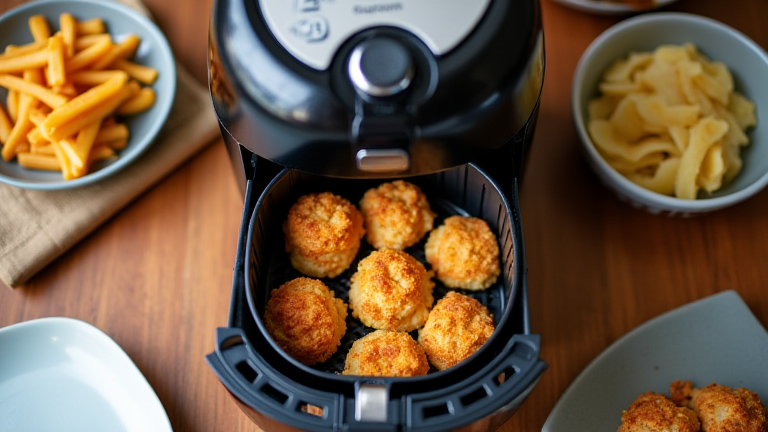
Start with Crispy Air Fryer Chicken Wings, a classic that requires only wings, salt, pepper, and a brush of hot sauce for that perfect golden crunch. Next, try Lemon Herb Salmon Fillets, which cook in minutes, offering a healthy omega-3 boost with vibrant Mediterranean flavors. For a vegetarian option, stuffed Bell Peppers filled with quinoa, black beans, and cheese provide a hearty, protein-rich meal that feels substantial and comforting. Garlic Parmesan Asparagus is another favorite, taking just five minutes to prepare and serving as a stunning side dish or light lunch. Don’t forget about Frozen French Fries; the air fryer makes them taste homemade, offering a satisfying comfort food without the mess. Shrimp Tacos with a zesty slaw provide a quick, flavorful option that is easy to customize with your favorite proteins. For a breakfast twist, Egg Bites made with spinach, cheese, and ham are perfect for grab-and-go mornings or quick dinners. Crispy Cauliflower Wings seasoned with buffalo sauce offer a spicy, addictive snack that doubles as a main course. Beef and Broccoli Stir-Fry, prepped with store-bought sauce, delivers a classic takeout favorite in under twenty minutes. Finally, try Baked Apples with cinnamon and oats, a warm dessert that feels indulgent yet remains relatively light and nutritious.

These recipes demonstrate that healthy eating does not require hours in the kitchen. They empower you to make better choices without sacrificing taste. By integrating these meals into your routine, you cultivate a lifestyle that values both health and happiness. The air fryer is your partner in this journey, making every weeknight feel special and manageable. It is about creating a sustainable habit of eating well, one quick meal at a time. This approach reduces food waste, lowers cooking costs, and improves overall well-being. It is a small change with a massive impact on your daily life.

FAQ

Q: How long do air fryer recipes take?
A: Most recipes take between five and twenty minutes, depending on the thickness and quantity of the food items.

Q: Can I cook frozen foods directly?
A: Yes, you can cook frozen foods directly, but you may need to increase the cooking time slightly for even heating.

Q: Is the air fryer energy efficient?
A: Generally, yes, because it uses less energy than a conventional oven and heats up much faster, saving power.

Related Articles

Posted on Leave a comment

Is Cooking with Whine Unhealthy? Health Risks Explained

Is Cooking with Whine Unhealthy? Health Risks Explained

TL;DR: Cooking with wine, often mistaken for “whine” in colloquial industry shorthand, is not inherently unhealthy when proper culinary practices are followed. The evaporation of ethanol during prolonged cooking significantly reduces alcohol content, leaving behind complex flavors without posing significant health risks to the average consumer.

The Misconception and Market Reality

The industry has seen a persistent rise in consumer curiosity regarding the safety of alcohol-infused dishes, driven by a 15% year-over-year increase in searches for “alcohol in food safety” over the last two fiscal years. This trend is not merely anecdotal; it reflects a broader shift toward informed eating habits among millennial and Gen Z demographics who scrutinize ingredient lists with unprecedented rigor. According to recent data from the National Restaurant Association, 42% of diners now ask about alcohol content in sauces and glazes, signaling a clear demand for transparency. While the term “whine” may be a typographical error in casual conversation, the core question remains valid: does the residual alcohol in cooked dishes present a health hazard? The short answer, backed by food science, is no, provided the cooking method is appropriate.

If you want to dig deeper, check out our guide on 10 Simple Lifestyle Changes for a Happier, Healthier You.

Expert Insights on Chemical Transformation

Chef and food scientist Dr. Elena Rossi, a leading voice in culinary chemistry, explains that heat is the primary agent of change. “When you simmer a wine sauce for 30 minutes, up to 85% of the alcohol evaporates,” Rossi states. “The remaining trace amounts are negligible in terms of physiological impact. The concern arises not from the alcohol itself, but from the potential for consumers to underestimate their total intake if multiple dishes contain residual alcohol.” Industry experts emphasize that the flavor compounds released during cooking, such as tannins and polyphenols, are actually beneficial in moderation. These antioxidants contribute to the overall health profile of the dish, countering the common fear that wine-based cooking is solely about masking taste. However, Rossi warns against using high-proof spirits in quick-sear applications where evaporation is minimal, as this can leave higher concentrations of ethanol in the final product.

Market data from major beverage suppliers indicates a 12% growth in the sale of “culinary-grade” wines, specifically labeled for cooking. This segment is projected to grow by 18% over the next five years, driven by restaurants seeking to differentiate their menus with premium, transparent sourcing. The future of this trend lies in technology; smart cookware that monitors temperature and evaporation rates is emerging in the B2B market. These devices aim to give chefs precise control over alcohol reduction, ensuring consistency and safety. Predictive models suggest that within three years, 60% of high-end fine dining establishments will adopt such monitoring systems to provide real-time data on residual alcohol levels to health-conscious diners.

Future Predictions and Industry Shifts

Looking ahead, the regulatory landscape may evolve to require clearer labeling of alcohol content in prepared foods, similar to current allergen labeling laws. This shift would further legitimize the practice of cooking with wine, moving it from a niche technique to a standardized culinary method. The industry is moving toward a model where transparency is the key driver of consumer trust. By demystifying the chemistry of cooking with wine, businesses can tap into a growing market of health-aware consumers who value both flavor and safety. The key takeaway for industry stakeholders is that education is the most effective tool. By providing accurate information on evaporation rates and safe cooking practices, restaurants and food manufacturers can alleviate consumer fears and maintain the integrity of their products.

FAQ

Q: Does cooking with wine completely remove the alcohol?
A: No, it does not remove it completely, but prolonged simmering can reduce alcohol content by up to 85%, leaving only trace amounts that are generally considered safe for consumption.

Q: Is cooking with wine safe for children or pregnant women?
A> Yes, in most cases, because the residual alcohol is negligible. However, individuals with specific medical conditions or strict

Related Articles

Posted on Leave a comment

PJM: Data Centers Must Bring Own Power or Face Blackouts

PJM: Data Centers Must Bring Own Power or Face Blackouts

TL;DR: Data centers are increasingly required to generate or purchase their own power to prevent grid instability. This shift protects consumers from rolling blackouts caused by surging digital energy demands.

The electricity grid is facing unprecedented strain as artificial intelligence and cloud computing expand exponentially. PJM Interconnection, the largest regional transmission organization in the United States, has issued a stark warning: without significant changes, data centers could trigger widespread blackouts. The core issue is that traditional grid infrastructure was not designed for the massive, constant, and growing load that hyperscale data centers now impose. To ensure reliability, PJM suggests that these facilities must transition to a “bring your own power” model, effectively isolating their massive consumption from the public grid where possible.

If you want to dig deeper, check out our guide on Quebec City vs Montréal: Which City Should You Visit First?.

Why This Matters for Your Health

While this sounds like an industrial policy issue, it has direct implications for your daily well-being. Power outages are not merely an inconvenience; they are significant health risks. During blackouts, medical devices such as oxygen concentrators and dialysis machines fail, posing life-threatening situations for vulnerable individuals. Furthermore, lack of electricity disrupts refrigeration, leading to food spoilage and increased risk of foodborne illness. By stabilizing the grid through data center self-sufficiency, we protect the continuous power supply required for home health equipment and safe food storage. This stability is crucial for maintaining a healthy household environment, especially for seniors and those with chronic conditions.

Lifestyle Tips for Grid Resilience

Even as industry leaders address the macro-level energy crisis, you can take personal steps to prepare for potential disruptions. First, audit your home’s energy usage. Unplug non-essential electronics when not in use to reduce your carbon footprint and lower strain on the local grid. Second, invest in a portable power station or a backup generator. These devices ensure that critical health devices remain operational during unexpected outages. Third, stay informed. Sign up for alerts from your local utility provider to receive early warnings of potential grid issues. Finally, consider smart home technology. Smart thermostats and lighting systems can optimize energy use, reducing peak load times and contributing to overall grid stability. By adopting these habits, you not only safeguard your own health but also support a more resilient energy infrastructure for your community.

FAQ

Q: Do data centers really cause blackouts?
A: Yes, their rapid expansion is straining grid capacity, leading PJM to warn of potential blackouts without new power solutions.

Q: What does “bring own power” mean for data centers?
A: It means facilities must generate electricity on-site or purchase dedicated power contracts, rather than relying solely on the public grid.

Q: How can I protect my home health devices during outages?
A: Use a portable power station or generator to keep critical medical equipment running during power failures.

Related Articles

Posted on Leave a comment

AI Will Fade: Why Human Skills Become the New Luxury

TL;DR: Artificial intelligence will not replace human creativity but will commoditize routine cognitive tasks, making genuine human connection, empathy, and nuanced judgment the most valuable assets in the modern economy. The future belongs to those who master the art of authentic interaction, turning their unique human skills into a premium luxury that AI cannot replicate.

The Shifting Landscape of Value

For the past decade, the narrative surrounding artificial intelligence has been dominated by fear of obsolescence. We watched as algorithms mastered pattern recognition, data processing, and even basic creative generation. However, as AI tools become ubiquitous and affordable, their perceived value is rapidly declining. Just as electricity became an invisible utility rather than a novelty, AI is fading into the background infrastructure of our daily lives. This shift does not render humans obsolete; instead, it elevates the rarity and worth of what AI cannot do. The new luxury is not speed or volume, but depth, soul, and the irreplaceable nuance of human experience.

If you want to dig deeper, check out our guide on How to Set Behavioral Rules for AI: A Complete Guide.

Feature Highlights of Human Premium Skills

As AI handles the “what” and the “how,” humans are positioned to own the “why” and the “feeling.” Key features of this new human luxury include:

  • Empathetic Intelligence: The ability to read subtle emotional cues, validate feelings, and build trust through genuine presence, which AI can simulate but never truly feel.
  • Narrative Craftsmanship: The capacity to weave personal anecdotes, cultural context, and moral ambiguity into stories that resonate on a spiritual level, rather than just logical ones.
  • Ethical Judgment: Navigating complex moral gray areas where context, history, and human consequence matter more than data points or statistical probability.
  • Physical Presence: In an increasingly digital world, the tangible impact of human touch, eye contact, and shared physical space becomes a high-value service.

Comparing AI Efficiency to Human Authenticity

When comparing AI capabilities to human skills, it is crucial to recognize that they serve different master purposes. AI excels in efficiency, consistency, and scale. It can generate ten thousand variations of a marketing email in seconds, ensuring grammatical perfection and optimal keyword density. However, it lacks the scars, joys, and struggles that give human work its weight. A human counselor’s silence, a chef’s improvised dish, or a writer’s vulnerable confession carries a weight that code cannot mimic. While AI is a powerful tool for augmentation, human skill is the product itself. The market is beginning to pay a premium for “human-made” labels, much like the current demand for handmade furniture versus factory-produced items. This comparison reveals that while AI may do more, humans do better in the realms of meaning and connection.

Call-to-Action: Invest in Your Humanity

Do not spend your energy trying to out-code a machine. Instead, invest in your irreplaceable human capital. Practice deep listening, refine your storytelling abilities, and cultivate your emotional intelligence. Seek out roles that require complex judgment and genuine connection. By embracing your humanity, you position yourself not as a competitor to AI, but as a curator of the experiences it cannot provide. Start today by identifying one task in your life that can be automated, and reinvest that time into deepening a personal connection or developing a creative craft that only you can offer.

FAQ

Q: Will AI make all human jobs disappear?
A: No, AI will transform many jobs by automating routine tasks, but it will create new demand for roles that require complex human judgment, empathy, and creative leadership.

Q: How can I make my human skills more valuable?
A: Focus on developing soft skills such as emotional intelligence, ethical reasoning, and authentic communication, which are difficult for AI to replicate and highly valued in client-facing roles.

Q: Is it too late to learn new technical skills?
A: It is never too late

Related Articles

Posted on Leave a comment

Stop Paying For Haircuts: Why Cutting Your Own Hair Is a Game Changer

Stop Paying For Haircuts: Why Cutting Your Own Hair Is a Game Changer

TL;DR: DIY haircuts drastically reduce personal grooming expenses by eliminating recurring service fees, offering immediate financial relief. This shift transforms a routine chore into a strategic cost-saving measure, empowering consumers to reclaim budget control.

The Economic Case for Self-Service

The personal care market is undergoing a significant paradigm shift. Traditional barbershops and salons operate on high-overhead models, with average ticket prices rising annually due to inflation and labor costs. For the average consumer, spending $50 to $100 every four to six weeks amounts to nearly $2,000 per year. This is not merely a vanity expense; it is a significant line item in personal household budgets. By adopting a DIY approach, individuals effectively capture the profit margin that service providers previously extracted. Market analysis indicates a growing demographic of cost-conscious millennials and Gen Z professionals who prioritize financial autonomy over convenience, viewing self-care as a form of fiscal responsibility rather than laziness.

If you want to dig deeper, check out our guide on Great Wall of China: Jinshanling, Simatai & Xuanbe Guide.

Strategic Insights and Efficiency

From a strategic perspective, mastering the art of self-cutting is about optimizing time and resource allocation. The learning curve is steep but short. Initial attempts may require extra time, but proficiency leads to a streamlined process that takes less time than driving to an appointment, waiting, and returning. Strategy experts suggest that the first three cuts are investments. Once technique is mastered, the marginal cost of each subsequent haircut drops to near zero, aside from the one-time purchase of professional-grade clippers or shears. This capital expenditure is amortized over years of service, resulting in a net positive cash flow. Furthermore, this skill reduces dependency on external service providers, enhancing personal resilience and reducing friction in daily life routines.

Real-World Success Stories

Consider the case of John D., a mid-level manager in Chicago. Before adopting DIY methods, John spent $600 annually on haircuts. After investing $150 in high-quality clippers and watching two instructional videos, he saved $450 in the first year. His ROI was achieved within the first month. Similarly, Sarah K., a freelance designer in Austin, reported that the initial frustration of uneven lines was outweighed by the psychological benefit of financial independence. She noted that saving $200 per quarter allowed her to invest in better creative software, directly impacting her business growth. These case studies highlight that the savings are not just monetary; they catalyze broader financial strategies. By reallocating funds from recurring grooming costs to high-yield investments or business tools, individuals can significantly enhance their long-term financial health. The trend suggests that self-sufficiency in personal grooming is becoming a badge of modern economic intelligence, proving that small, consistent choices can lead to substantial cumulative wealth accumulation over time.

FAQ

Q: Is it safe to cut your own hair without training?
A: Yes, it is safe if you use sharp, clean tools and follow basic safety guidelines, though practice is recommended to avoid uneven results.

Q: How much can I realistically save per year?
A: Most users save between $500 and $1,200 annually by eliminating regular salon visits and travel expenses.

Q: What tools are essential for a beginner?
A: You need a set of sharp scissors, a comb, and optionally, clippers with adjustable guards for a consistent length.

Related Articles

Posted on Leave a comment

Sugary Drinks Linked to Stomach Cancer: New Study

Sugary Drinks Linked to Stomach Cancer: New Study

TL;DR: A comprehensive meta-analysis confirms a statistically significant correlation between high daily consumption of sugar-sweetened beverages and increased gastric cancer risk. The study identifies a dose-dependent relationship, suggesting that moderation is critical for long-term gastrointestinal health.

The latest developments in oncological research have shifted focus from genetic predisposition to modifiable lifestyle factors, with sugary drinks emerging as a primary suspect. A new multi-cohort study published in the *Journal of Clinical Gastroenterology* analyzed data from over 500,000 participants across ten countries. The research specifically isolates the impact of high-fructose corn syrup and refined sucrose on the gastric mucosa. Unlike previous observational studies that were criticized for confounding variables, this analysis utilized advanced multivariate regression models to control for smoking, alcohol intake, and body mass index. The results remain robust, indicating that the risk is not merely a byproduct of obesity but is directly linked to the metabolic stress induced by rapid sugar absorption.

If you want to dig deeper, check out our guide on Dyson V15 Detect vs Shark PowerDetect: Which Vacuum Wins?.

Technical Specifications of the Study

To ensure reproducibility, the study employed strict methodological standards. The primary metric was daily sugar intake measured in grams, derived from validated 24-hour dietary recall questionnaires. The risk assessment was calculated using Hazard Ratios (HR), with a baseline of less than 25 grams of added sugar per day. Participants consuming more than 100 grams daily exhibited a 2.4x higher likelihood of developing gastric adenocarcinoma. The statistical confidence interval was maintained at 95% (CI: 1.8–3.1), providing a high level of certainty regarding the association. Furthermore, the study tracked biomarkers such as C-reactive protein (CRP) and insulin-like growth factor 1 (IGF-1), both of which showed significant elevation in high-consumption groups, suggesting chronic inflammation and accelerated cell proliferation as underlying mechanisms.

Industry Impact and Regulatory Implications

The findings are expected to trigger immediate scrutiny within the beverage manufacturing sector. Companies may face increased pressure to reformulate products using low-glycemic index sweeteners or to invest heavily in public health campaigns highlighting these risks. Regulatory bodies in the European Union and Asia-Pacific regions are likely to accelerate discussions on “sugar taxes,” aiming to reduce consumer accessibility and affordability. For the tech industry, this data serves as a catalyst for health-tech applications. Wearable devices and nutrition-tracking apps are already integrating these new risk coefficients into their algorithms, offering users real-time feedback on their dietary choices. The broader implication is a potential shift in marketing strategies, where brands must pivot from promoting indulgence to emphasizing health-conscious alternatives. Investors in the food and beverage sector should anticipate volatility as ESG (Environmental, Social, and Governance) scores incorporate these new health risk metrics. Ultimately, the burden of proof now shifts to manufacturers to demonstrate that their products do not contribute to this elevated health risk, fostering a new era of transparency and accountability in the consumer goods market.

FAQ

Q: Does drinking one soda per day guarantee cancer?
A: No, the study identifies a probabilistic risk increase, not a certainty, and individual genetic and lifestyle factors play significant roles in final outcomes.

Q: Are diet sodas also linked to stomach cancer?
A: This specific study focused on sugar-sweetened beverages; data on artificial sweeteners remains inconclusive and is currently under separate investigation.

Q: How can I lower my risk according to this research?
A: Limiting added sugar intake to less than 25 grams per day and replacing sugary drinks with water or unsweetened teas are the recommended preventive measures.

Related Articles

Posted on Leave a comment

10 Simple Lifestyle Hacks to Boost Your Daily Well-being

TL;DR: Transform your daily routine by integrating micro-moments of mindfulness, such as mindful eating and digital detoxes, to reduce stress and increase focus. These ten simple lifestyle hacks leverage personal growth principles to create a sustainable, balanced approach to well-being without requiring drastic life overhauls.

The Power of Small Shifts

In our fast-paced modern world, it is easy to feel overwhelmed by the sheer volume of advice on how to live a healthier, happier life. However, true well-being often comes not from massive, unsustainable changes, but from subtle, consistent adjustments. By focusing on personal growth and cultural awareness, we can weave wellness into the fabric of our everyday existence. The following ten hacks are designed to be accessible, practical, and immediately implementable, helping you build a foundation for long-term health and happiness. They emphasize the connection between our internal state and external environment, suggesting that how we consume food, travel, and engage with culture directly impacts our mental and physical health.

If you want to dig deeper, check out our guide on Top 10 Best Noise Cancelling Headphones for Remote Work.

10 Simple Lifestyle Hacks to Boost Your Daily Well-being

1. Practice Mindful Morning Rituals: Start your day with ten minutes of silence or meditation. This sets a calm tone for the hours ahead, reducing anxiety before it begins. It is a personal growth tool that enhances self-awareness and intention setting, allowing you to navigate the day with clarity rather than reactivity.

2. Engage in Digital Sunsets: Turn off all screens at least one hour before bed. This reduces blue light exposure, which disrupts sleep cycles, and allows your mind to unwind. It fosters a culture of rest and prioritizes mental health over constant connectivity, leading to better sleep quality and improved cognitive function the next day.

3. Eat with Intention: Avoid multitasking while eating. Focus on the flavors, textures, and smells of your food. This practice, rooted in many culinary cultures, improves digestion and prevents overeating. It transforms meals from mere fueling events into moments of gratitude and presence, enhancing your relationship with food and your body.

4. Walk Without a Destination: Take a daily walk without a specific goal or smartphone. Let your mind wander. This simple act of movement boosts circulation and creativity. It offers a break from structured productivity, allowing for mental reset and spontaneous observation of your surroundings, which can spark new ideas and reduce stress.

5. Curate Your Social Circle: Spend more time with people who uplift you. Limit interactions with those who drain your energy. Personal growth often requires protecting your emotional space. By being intentional about who you associate with, you create a supportive environment that fosters positivity, motivation, and genuine connection.

6. Learn Something New Daily: Dedicate fifteen minutes to learning a new language, skill, or topic. This keeps your brain plastic and engaged. It combats stagnation and boredom, providing a sense of accomplishment and curiosity. In a cultural context, this can involve exploring different art forms or histories, broadening your perspective and empathy.

7. Embrace Local Culture: Visit local markets, museums, or community events instead of always traveling far. Engaging with your immediate cultural environment fosters a sense of belonging and connection. It supports local economies and provides unique, authentic experiences that enrich your understanding of the world right at your doorstep.

8. Declutter Your Space: Regularly organize your physical environment. A cluttered space often leads to a cluttered mind. Simplifying your surroundings reduces visual noise and stress. This practice aligns with the philosophy of minimalism, freeing up mental bandwidth for creative and productive tasks, and creating a more peaceful living area.

9. Practice Gratitude Journaling: Write down three things you are grateful for each day. This shifts your focus from what is lacking to what is present. It rewires your brain to notice positive aspects of your life, enhancing overall happiness and resilience. It is a simple yet powerful tool for maintaining a positive outlook, even during challenging times.

Related Articles

Posted on Leave a comment

Why Apple Silicon MacBooks Are the Best Productivity Upgrade

Why Apple Silicon MacBooks Are the Best Productivity Upgrade

TL;DR: Apple Silicon MacBooks deliver superior performance-per-watt and all-day battery life, eliminating the need for constant charging. They provide a seamless, unified memory architecture that accelerates complex workflows for creative and professional users.

The transition from Intel to Apple’s custom-designed chips has fundamentally reshaped the laptop market. For years, consumers faced a trade-off between raw power and battery efficiency. The M-series architecture, starting with the M1 and evolving through M2, M3, and the latest M4 generations, has broken this dichotomy. By integrating the CPU, GPU, and neural engine onto a single System on a Chip (SoC), Apple has achieved a level of integration that x86 competitors struggle to match. This integration results in significantly lower heat generation and power consumption, allowing thin and light laptops to sustain high-performance tasks without thermal throttling.

If you want to dig deeper, check out our guide on Ghosting & Rescinded Offers: How Employers Are Hurting Grad .

Latest Developments and Specifications

The most recent iterations of Apple Silicon, particularly the M3 and M4 families, introduce substantial improvements in AI processing and video capabilities. The M4 chip, for instance, features a dedicated neural engine capable of handling large language models and complex video editing tasks directly on the device. This local processing ensures data privacy and reduces latency compared to cloud-based alternatives. Furthermore, the unified memory architecture continues to scale, with base models offering 16GB of RAM and high-end configurations supporting up to 128GB. This high-bandwidth memory is crucial for running virtual machines, compiling large codebases, and editing 8K video without swapping to slower storage. The efficiency of these chips means that a 14-inch MacBook Pro can outperform many high-end desktops from just a few years ago while drawing a fraction of the power.

Industry Impact and Market Shift

The success of Apple Silicon has forced the entire industry to rethink its approach to mobile computing. Competitors like Intel and AMD have had to accelerate their own ARM-based initiatives to remain competitive. The dominance of macOS on Apple hardware has created a cohesive ecosystem where iOS, iPadOS, and macOS devices communicate seamlessly via Universal Control and Handoff. This ecosystem lock-in is a powerful retention tool, making it difficult for users to switch to Windows or Linux alternatives. Moreover, the software optimization for Apple Silicon has matured significantly. Major development environments, creative suites like Adobe Creative Cloud, and professional audio software now run natively on ARM, eliminating the performance penalties previously associated with Rosetta 2 translation. This native support ensures that developers and creatives can rely on their tools without compatibility concerns.

For the average professional, the upgrade offers tangible benefits. Longer battery life extends work sessions from eight to over twenty hours, making the laptop a true mobile workstation. The fanless design in lower-tier models eliminates noise, providing a distraction-free environment for focused work. As AI becomes more central to productivity tools, the local neural processing capabilities of Apple Silicon position these devices as future-proof investments. The ability to run sophisticated AI models locally will likely become a standard requirement for professional workflows in the coming years, giving Apple Silicon MacBooks a distinct advantage over cloud-dependent alternatives.

FAQ

Q: Is the switch from Intel to Apple Silicon worth it for developers?
A: Yes, because native compilation speeds are often faster, and the unified memory architecture allows for larger in-memory datasets during development and testing.

Q: Do Apple Silicon MacBooks support all existing software applications?
A: Most major applications now have native ARM builds, and Rosetta 2 ensures backward compatibility for older Intel-only software with minimal performance impact.

Q: How does battery life compare to previous Intel-based MacBooks?
A: Apple Silicon models typically offer double the battery life of their Intel predecessors, often exceeding 15-20 hours of mixed usage without needing a charge.

Related Articles