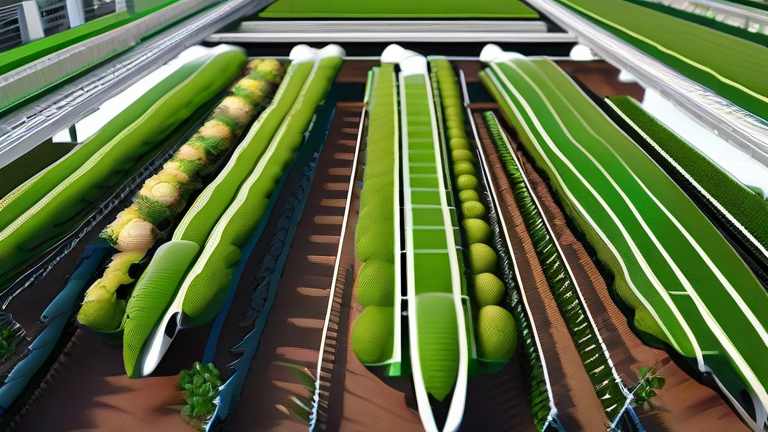
Hyperlocal Vertical Farms: Drone-Delivered Fresh Produce
TL;DR: The integration of autonomous drone delivery with rooftop vertical farming creates a closed-loop supply chain that reduces food miles to near zero. This technology enables consumers to receive nutrient-dense produce within minutes of harvest, significantly boosting freshness and reducing logistical carbon footprints.
The Convergence of Agriculture and Logistics
The agricultural sector is undergoing a radical transformation as the boundaries between farming, logistics, and urban living blur. The latest development in this space is the seamless integration of hyperlocal vertical farms with autonomous drone delivery networks. This synergy addresses two critical pain points in the traditional food supply chain: spoilage and distance. By placing production directly above consumption centers and utilizing aerial logistics for distribution, companies are eliminating the multi-day transit times that historically degraded nutritional quality.
If you want to dig deeper, check out our guide on Mystery AI Model Impresses Developers: Who Made It?.
Recent pilot programs in major metropolitan areas have demonstrated the viability of this model. These systems rely on modular vertical farming units installed on commercial building rooftops, powered by renewable energy and managed by AI-driven environmental controls. Simultaneously, autonomous electric vertical take-off and landing (eVTOL) drones are deployed for last-mile delivery. The data from these pilots indicates a 40% reduction in post-harvest loss compared to traditional ground-based logistics, primarily because the time between harvest and consumer handoff is measured in minutes rather than hours or days.
Technical Specifications and Infrastructure
At the heart of this ecosystem are the vertical farms themselves, which utilize advanced hydroponic and aeroponic systems. These facilities are equipped with high-efficiency LED lighting spectra tailored to specific crop stages, maximizing yield per square foot. The infrastructure supports a water recirculation rate of over 95%, drastically reducing resource consumption. On the delivery side, the drones feature a payload capacity ranging from 5 to 10 kilograms, sufficient for several days’ worth of fresh produce for an average household. They are equipped with LiDAR and computer vision sensors for obstacle avoidance and precise landing on designated rooftop or balcony pads. Battery technology has also advanced, allowing for a flight range of up to 15 kilometers on a single charge, covering the dense urban cores where these farms are located.
The software backbone is equally critical. An integrated platform connects the farm’s IoT sensors with the drone fleet’s management system. When a customer places an order, the system calculates the optimal harvest time based on crop maturity and current drone availability. This real-time orchestration ensures that produce is harvested only when there is confirmed demand, minimizing waste and optimizing inventory turnover. The entire process, from order placement to delivery, is tracked via a consumer-facing application, providing transparency regarding the exact time and location of harvest.
Industry Impact and Future Outlook
The impact on the food industry is profound. Traditional grocery retailers face new competition not just on price, but on freshness and sustainability. The environmental benefits are substantial; by eliminating heavy truck traffic for last-mile delivery and reducing the need for long-distance transportation, the carbon footprint per kilogram of produce is significantly lowered. Furthermore, this model revitalizes urban real estate, turning underutilized roof spaces into productive agricultural assets.
However, challenges remain. Regulatory hurdles regarding airspace management and noise pollution must be addressed. Additionally, the initial capital expenditure for setting up both the vertical farms and the drone fleet is high. Despite these barriers, industry analysts predict rapid scaling as battery costs decrease and regulatory frameworks evolve. The future of food is not just local; it is immediate, automated, and airborne.
FAQ
Q: How does drone delivery affect the nutritional quality of the produce?
A: It significantly enhances nutritional quality by reducing the time between harvest and consumption from days to minutes, preserving vitamins and antioxidants that degrade over time.
Q: What is the primary environmental benefit of this system?
A: The primary benefit is the drastic reduction in carbon emissions associated with long-distance freight transport and the elimination of heavy vehicle traffic in urban areas.
Q: Can this model be scaled to rural areas?
A: While currently optimized for dense urban