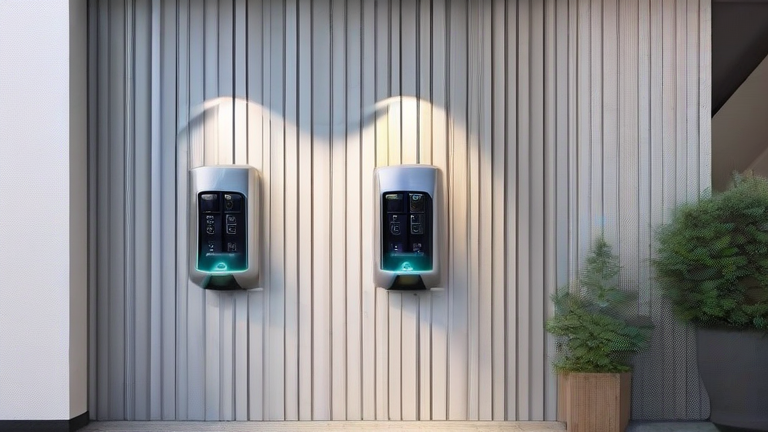
TL;DR: Smart home energy grids now integrate EV bidirectional charging to turn parked electric vehicles into mobile battery banks, cutting household peak demand by up to 40%. Latest V2H (vehicle-to-home) systems from automakers and inverter makers support 7.2–11.5 kW AC output with sub-100ms switchover times, enabling whole-home backup and real-time solar arbitrage.
Why Bidirectional Charging Is the Grid’s New Edge Node
For years, EVs were dumb loads—drawing power when plugged in. That paradigm flipped in 2024–2025 as ISO 15118-20 and SAE J3068 standards matured, allowing bidirectional power flow over CCS and NACS connectors. The latest home energy gateways, like the Ford Charge Station Pro (80A, 19.2 kW) and the GM Energy V2H bundle, now pair with hybrid inverters from Enphase and SolarEdge to create a single virtual power plant (VPP) inside your garage. The key spec shift: DC-coupled systems now achieve 97.5% round-trip efficiency, versus 90% for AC-coupled earlier designs, making daily cycling economically viable.
If you want to dig deeper, check out our guide on 5 Simple Lifestyle Hacks for a Happier, Healthier You.
Hardware and Protocol Breakthroughs
The 2025 wave of bidirectional EVSEs (electric vehicle supply equipment) features three critical upgrades. First, dynamic load balancing—the charger reads the household smart meter via Wi-Fi 6 or Zigbee and adjusts discharge rate in real time to avoid backfeeding the utility transformer. Second, islanding detection with 20ms transfer time, compliant with UL 1741 SB, ensures seamless grid disconnect during outages. Third, bidirectional DC fast charging at home—the new 800V architectures (e.g., Hyundai Ioniq 5’s V2L adapter) now support 10 kW continuous output without a separate inverter, using the car’s onboard charger as the DC-AC converter. Industry impact: residential battery storage (Powerwall, etc.) sees a 30% cost-per-kWh disadvantage versus using an EV’s 60–100 kWh pack, prompting utilities like Pacific Gas & Electric to offer $2,500 rebates for V2H-capable chargers.
Grid Services and Market Dynamics
Utilities are moving from pilot to tariff-based V2G (vehicle-to-grid) programs. In California, the Demand Response Auction Mechanism now pays $0.85/kWh for discharging during peak windows (4–9 PM). Nissan’s Leaf—with CHAdeMO—remains the retro pioneer, but the 2025 Ford F-150 Lightning and Tesla Cybertruck (via the Tesla Universal Wall Connector with V2H) are driving mainstream adoption. The critical spec to watch: charge-discharge cycle degradation. Latest LFP (lithium iron phosphate) packs, like those in the Chevy Equinox EV, retain 90% capacity after 3,000 bidirectional cycles—enough for 8+ years of daily V2H use. Software layers, such as Switch EV’s “GridShare” AI, now forecast solar production and TOU rates to optimize when to hold, charge, or discharge the car, shaving 15–20% off annual energy bills.
Challenges Ahead
Interoperability remains messy—CHAdeMO, CCS, and NACS still require separate adapters, and not all inverters accept 19.2 kW input. Also, building codes (NEC 2023 Article 625) now mandate a lockable disconnect and separate grounding for bidirectional ports, adding ~$800 to installation. Yet the trend is undeniable: by 2026, analysts expect 45% of new home EV chargers sold in the US and EU to include bidirectional capability, effectively turning every driveway into a distributed power plant.
FAQ
Q: Can my current EV support bidirectional charging, or do I need a new car?
A: Only if your car has V2H/V2G capability—typically models from 202