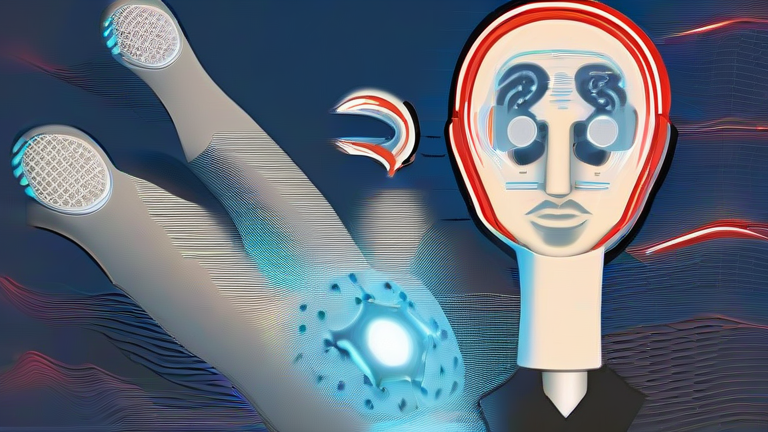
Non-Invasive Neural Interfaces: Control Devices with Your Mind
The landscape of human-computer interaction is undergoing a radical transformation, shifting from physical touchscreens and voice commands to the direct translation of neural activity. Non-invasive neural interfaces, often referred to as brain-computer interfaces (BCIs), are no longer confined to the realm of science fiction. Recent breakthroughs in sensor technology and machine learning algorithms have enabled these devices to interpret complex brain signals with unprecedented accuracy, paving the way for a new era of seamless digital integration. Unlike their invasive counterparts, which require surgical implantation, non-invasive systems utilize wearable headsets, EEG caps, or even smart glasses to detect electrical impulses generated by the brain. This approach significantly lowers the barrier to entry, making the technology accessible to consumers, researchers, and clinical patients alike.
Recent developments have focused heavily on improving signal-to-noise ratios and processing speeds. Traditional EEG technology has long suffered from low spatial resolution and susceptibility to electromagnetic interference. However, next-generation dry-electrode sensors and magnetoencephalography (MEG) sensors are overcoming these hurdles. Leading tech giants and agile startups are now deploying devices that can decode motor imagery with near real-time latency. For instance, new algorithms leveraging deep neural networks can distinguish between subtle variations in brainwaves, allowing users to control computer cursors, type text, or manipulate virtual objects simply by thinking about the movement. These systems boast processing speeds that exceed 100 bits per second, a metric that has historically been the bottleneck for practical application.
If you want to dig deeper, check out our guide on Personalized Nutrition: Real-Time Microbiome Data.
The implications for various industries are profound. In healthcare, non-invasive BCIs offer hope for patients with amyotrophic lateral sclerosis (ALS), spinal cord injuries, or locked-in syndrome. These devices restore communication and mobility without the risks associated with surgery. In the gaming and entertainment sectors, immersive experiences are being redefined. Imagine playing a video game where your emotional state directly influences the narrative or where you navigate environments using only your focus and intent. The gaming industry has already begun investing heavily in this space, recognizing the potential for deeper user engagement and emotional connection.
Furthermore, the professional sector