Space Tourism Prices Drop for Mid-Tier Consumers
The celestial frontier is no longer reserved exclusively for billionaires and government agencies. A significant shift is underway in the commercial spaceflight industry, driven by intense competition and technological maturation. For the first time, the barrier to entry is lowering, making orbital experiences accessible to a broader demographic of affluent, mid-tier consumers. This evolution marks a pivotal moment in aerospace history, transitioning space travel from a novelty for the ultra-wealthy to a viable, albeit expensive, luxury product.
Recent announcements from leading private aerospace firms indicate a strategic pivot toward volume over exclusivity. Companies are leveraging reusable rocket technology to drastically reduce per-launch costs. Where initial suborbital flights commanded prices upwards of $250,000, recent pricing structures for orbital insertions have begun to stabilize around the $5 million mark. While still prohibitive for the average citizen, this represents a massive discount from early projections that suggested costs would remain in the nine-figure range for decades. The key driver behind this reduction is the standardization of launch vehicles and the implementation of rigorous safety protocols that allow for faster turnaround times between missions.
Technical Specifications and Market Impact

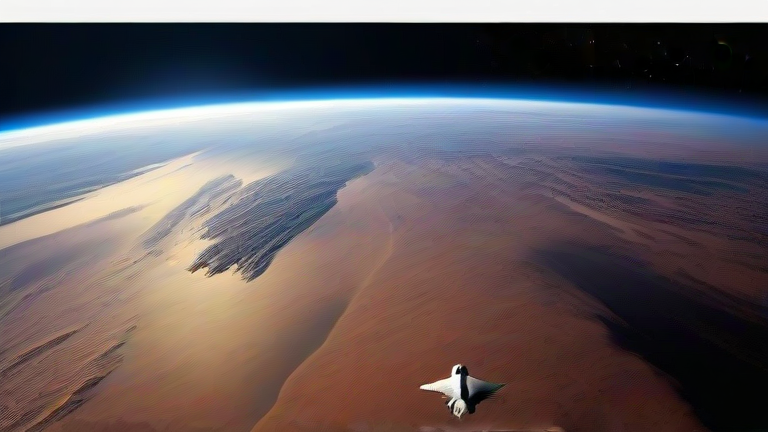
The latest generation of spacecraft features enhanced life-support systems designed for longer durations. Unlike early prototypes, these vehicles now boast redundant oxygen recycling units and advanced radiation shielding, ensuring passenger comfort during multi-day orbital stays. The interiors are being redesigned with ergonomics in mind, replacing cramped, industrial cockpits with spacious modules equipped with panoramic observation decks. These specs are not just about safety; they are about experience. Customers are paying for the privilege of witnessing Earth’s curvature in comfort, not just survival.
Industry analysts predict that this price correction will trigger a ripple effect across the broader aerospace sector. Traditional defense contractors are now investing heavily in dual-use technologies, aiming to adapt military-grade reliability for commercial applications. Meanwhile, ground-based infrastructure is expanding rapidly, with new spaceports being constructed in international waters and remote desert locations to accommodate higher launch frequencies. This infrastructure boom is creating thousands of jobs, ranging from engineering roles to hospitality services for pre-flight training facilities. The democratization of space access is fostering a new ecosystem of supporting industries